CONCEPT
Predestination
Predestination can be, and has sometimes been, regarded as a philosophical question rather than a Biblical one. It is with predestination as a Biblical question, however, that we are here mainly concerned. It is possible to urge, and it has been urged, that the philosophical question--whether all that occurs is foreordained--is not discussed and decided by Scripture. Theology, starting from God in its interpretation of all things, has arrived at universal foreordination by a species of deductive reasoning. But we must not argue the matter from any abstract principles, but deal with the actual facts as set forth in Scripture and as found, inductively, in the experience of man.
2. Its Fundamental Importance:
It must first be asserted, however, in view of much loose modern thinking, that predestination is a category of religious thought of fundamental importance. No category of religious thought could go deeper, for it reaches down to the Infinite Will in relation to the universe of finite wills, and lays stress on will as the core of reality. The philosophy of our time may be said to have received, from the time of Schopenhauer, an impact toward will-emphasis, alike in respect of will in the universe and in man. But the relation of the Absolute Will to the universe, and to mankind, is precisely that with which we are concerned in predestination.
3. Nature of Predestination:
Predestination is that aspect of foreordination Whereby the salvation of the believer is taken to he effected in accordance with the will of God, who has called and elected him, in Christ, unto life eternal. The divine plan of salvation must certainly be conceived under this aspect of individual reference. To understand and set forth the nature, and ethically justifiable character, of such a foreordaining to life eternal, is our purpose. For doctrine has need to be purged of the historic inconsistencies, and fatal illogicalities, with which, in its older forms of presentation, it was often infected. This, especially, in order that the doctrine may appear as grounded in reason and righteousness, not in arbitrariness and almighty caprice.
4. The Doctrine in Scripture:
To begin with, it must be said that there seems to be no evading the doctrine of an election by grace, as found both in the letter and the spirit of Scripture. The idea of predestination is set forth, with great power and clearness, in Romans 8:29,30, and with its elements or parts articulated in natural and striking form. The idea recurs in Ephesians 1, where it is finely said (1:4,5) that God hath chosen us in Christ "before the foundation of the world," having predestinated or "foreordained us unto adoption as sons through Jesus Christ"; and where it is said, further, that our salvation imports "the mystery of his will, according to his good pleasure" (1:9), which He purposed in Christ. This "eternal purpose" to save men through Christ is again referred to in Ephesians 3:11. This helpful mode of viewing predestination as in Christ, and never outside Him, had a place in religious thought at the Reformation time, as the famous "Formula of Concord," to be referred to below, shows. The predestined certainty of God's gracious work in Christ was not meant to perplex men, but to encourage and reassure all who trust in His grace. In Romans 9:14-25, the absolute sovereignty of God is put in a form whereby election is made to originate in the divine will apart from all human merit, whether actual or foreseen. But from this assertion of God's free supremacy we can derive no concrete theodicy, or do more than infer that God is just and wise in His exercise of free grace, even when His doings are most perplexing to us.
5. Historic Rise and Development of the Doctrine:
The needful thing is to understand, so far as may be, the nature of the cooperation that takes place between the divine and the human factors or elements, which latter factors include natural capacity, disposition and development, working under grace. It must be carefully observed that nothing in Scripture points to any personal and inexorable predestination to reprobation, in any sense corresponding to the personal election to salvation just spoken of. A non-election there may be, of course, but not in any sense that annuls full personal responsibility for coming short of life everlasting. The appeal of Scripture from first to last is to men as free. Calvin's strange way of putting the matter was, "Man therefore falls, God's Providence so ordaining, but he falls by his own fault." This idea of reprobation was first introduced by Gottschalk, a monk of the 9th century, long after the predestination doctrine had received its first full and positive exposition by Augustine. Augustine, following upon the indecision shown by the fathers in the first three centuries of the church, made the doctrine of a special predestination his foundation for special grace, in opposition to Pelagius. Augustine gave new prominence in his theory to the absolute will of God:
he made divine grace the only ground of man's salvation; it was to him the irresistible power working faith within the heart, and bringing freedom as its result. It was to him God's absolute predestination that determined who were believers. But Augustine held predestination as an inference from his conception of the Fall and of grace, rather than as a metaphysical principle.
6. The Doctrine in the Middle Ages:
In the Middle Ages, Anselm, Peter Lombard, and Aquinas, followed the Augustinian views only to a certain extent. Aquinas admits that predestination implies a relation to grace, but holds that grace is not of the essence of predestination. Predestination is, to Aquinas, a part of Providence, and it presupposes election in the order of reason. Though divine goodness in general be without election, Aquinas thinks the communication of a particular good cannot be without election. Predestination has, for him, its foundation in the goodness of God, which is its reason. Aquinas thinks predestination most surely takes effect, but not as from necessity; the effect takes place under the working of contingency. From such views we are recalled to the idea of a rigorous predestination, by Thomas Bradwardine and John Wycliff, in pre-Reformation times. We are thus brought up to the decretal system--so called from Calvin's making predestination consist of the eternal decree of God--which became, in its metaphysical principle, the fundamental position of the whole Reformed theology after the Reformation.
7. Predestination in the Reformed Theology:
The theology of the Reformed church adopted the Calvinistic doctrine of the decree of predestination and election. Calvin, however, simply carried the Augustinian theory to its logical and necessary conclusion, and he was the first to adopt the doctrine as the cardinal point or primordial principle of a theological system. Zwingli, it must be remembered, was, even before Calvin, of consistent deterministic leanings, as part of his large speculative views, which were not without a tendency to universalism. Salvation was, to Calvin, the execution of a divine decree, which was supposed to fix the extent and conditions of such salvation.
(1) Calvin's Definition.
Reprobation was, for Calvin, involved in election, and divine foreknowledge and foreordination were taken to be identical. Calvin's mode of defining predestination was as the eternal decree of God, by which He has decided with Himself what is to become of each and every individual. For all, he maintains, are not created in like condition; but eternal life ordained for some, eternal condemnation for others. Calvin confesses that this is a "horrible decree," and it is not surprising to find competent theologians in our time denying such a form of predestinarianism any place in the teachings of Paul, who never speaks of reprobation.
(2) Theology Advanced by Calvin.
It is generally overlooked, however, that theological advance registered by Calvin is to be seen by study of the views of the Middle Ages, and on to the Reformation, not by viewing Calvinism in our post-Reformation lights. It was love--"the fatherly love of God," as he terms it--the efficiency of saving love--which Calvin insisted upon, above all, in his teaching about God. But Calvin also heightened men's ideas as to the certitude of personal salvation. It is but fair to Calvin to remember--for superficial acquaintance with his teachings is far from rare--that he, in the strongest manner, maintained divine sovereignty to be that of divine wisdom, righteousness, and love, and expressly rejected the notion of absolute power as, in this connection, a heathenish idea. The Calvinistic doctrine was not absolute, but mediated in Christ, and conditioned upon faith.
8. Predestination in Lutheranism:
Luther and the Lutheran church at first shared the doctrine of predestination and election, Luther in his treatment of free will reproducing the Augustinian form of the doctrine in a strict manner. The predestination of Luther and Melanchthon proceeded, not from their conception of God, but rather from the doctrine of sin and grace. Melanchthon was less disposed than Luther to press the doctrine of absolute predestination, and, in his "synergistic" tendencies, laid increasing stress on human freedom, until he at length rejected the doctrine of absolute predestination. He was blamed by strict Lutheranism for yielding too much to Pelagianism. But the Lutheran "Formula of Concord," prepared in 1577, was not a very logical and consistent presentation of the case, for, opposed at points to Augustinianism, it fell back, in the end, on election in the Augustinian spirit. Or, to put the matter in another form, the "Formula of Concord" may be said to have held with Augustinianism, but to have differed by maintaining a Universal call along witha particular election, and it rejected the decree of reprobation. Later Lutheranism adopted a moderate form of doctrine, wherein predestination was often identified with prescience. But Lutheranism ought not, in strictness, to be identified, as is sometimes done, with the Arminian theory. The Lutheran doctrine of predestination was further developed by Schleiermacher, who emphasized the efficiency of grace, while adopting its universality in the Lutheran sense.
9. The Arminian View:
Arminianism, in its earliest assertion, maintained simply universal grace and conditional election. But in the five articles it formulated its opposition to Calvinism, although Arminius does not appear to have been more than moderately Calvinistic, as we would account it. Arminius gave grace supreme place, and made it, when welcome, pass into saving grace. He made election depend on faith, which latter is the condition of universal grace. Arminianism rejects the so-called common grace of the predestination theory, and its effectual grace for the elect, for, in the Arminian view, saving grace can in no case be missed save by resistance or neglect. Arminianism holds the awakened human will to cooperate with divine grace, in such wise that it rests with the human will whether the divine grace is really accepted or rejected. It is the claim of Arminianism to do more justice than Calvinism to faith and repentance, as conditions of personal salvation, and precedent thereto. The Arminian standpoint admits the foreknowledge of God, but denies foreordination, though it must seem difficult to reduce the foreknowledge of God to such a bare knowledge of the future. But it is, of course, freely to be granted that foreknowledge in God, simply as knowledge, does not carry any causal energy or efficiency with it. But it may still be doubted whether the prescience of God can be nothing more fruitful and creative than such a position implies, and whether its relation to predestination may not be a more necessary one. The theory seems to fail of giving satisfactory account of the divine activity in its relation to human activity, in the sphere of grace. The shortcoming of Arminianism lies in its failing also to do justice to the spirit of Scripture with its emphatic assertion of the doctrine of God as the one absolute will, which, in its expression, is the sole originative power of the universe.
See also PROVIDENCE.
10. Wesleyanism on Predestination:
Wesleyanism, or Methodist Arminianism, maintains, like Calvinism, the will of God to be supreme. But it distinguishes between the desires and the determinations of God. It takes divine foreknowledge to precede the divine volitions. It makes God's prescience purely intuitional, and regards that which He knows as nowise necessitated by such knowledge, a conception of God which differentiates the Wesleyan type of thought from Calvinism. God is held to have left events in the moral sphere contingent, in an important sense, upon the human will. Hence, human probation is based upon this position, as to man's free choice. Influence of God upon man's will is postulated, for its right guidance and direction, but not in any coercive sense, as Augustinianism seems to Wesleyanism to imply. Thus, it is hoped to preserve just balance, and maintain proper responsibility, between the divine and the human factors in this spiritual cooperation.
When we come to the present needs and values of the predestination doctrine, we have to remark the primal need of a thoroughly ethicized conception of God. The past few decades have witnessed a lessened interest in this doctrine, largely because of the increasingly ethical conceptions of Deity.
11. Present Needs and Values of the Doctrine:
That is to say, the doctrine of the sovereignty of God's will has ceased to be taken, as often in the older presentations, as mere almightiness, or arbitrary and resistless will. Calvin expressly taught that no cause or ground but God's unconditioned will was to be sought; but he feebly tried to save divine will from sheer omnipotence by saying that God is law to Himself; and the notion of sovereignty continued to be presented in ways quite absolute and irresponsible. But God we now regard as the absolute and eternal reason, no less than the supreme will, and as both of these in the one indivisible and absolute personality. We have passed from an abstract predestinationism to maintain God in living and ethical relations to the world and to man. Such an ethical sovereignty we hold to be necessary, over against that lax humanitarian spirit, which, in its recoil from the older Calvinism, invests the Deity with no greater powers of moral determination than may be implied in His love, when viewed as a mere golden haze of good will.
See ELECTION; FOREORDAIN.
LITERATURE.
The relative works of Augustine, Aquinas, Zwingli, Calvin, Luther, Melanchthon, Arminius, Wesley, Rothe, Dorner, Luthardt; W. Cunningham, The Reformers, and the Theology of the Reformation, 1862; James Orr, article "Calvinism," in Hastings, Encyclopedia of Religion and Ethics; and the various Histories of Christian Doctrine.
James Lindsay
▶Sermons
Audio
 ElectionC.H. Spurgeon · 58:25
The doctrine of election is the teaching that God has chosen certain individuals for salvation before the foundation of the world, based on His sovereign will and not on human merit or works.
 What Love Is This? - Part 6Dave Hunt · 9:50
Dave Hunt challenges Calvinism's misrepresentation of God's character, arguing that God's love is a matter of choice, not power, and that he desires the salvation of all people.
Text
 The Doctrine of Election 2. Its SourceA.W. Pink
A.W. Pink explains that the doctrine of election originates solely from the sovereign, immutable will of God, who from eternity chose certain rational beings unto eternal life to display His grace and glory.
 Wrath and MercyChristopher Love
God has ordained men to salvation and has decreed that only a small remnant shall obtain it, but this is no ground for us to have hard thoughts of Him.
 Oh, the Luck That Saves Us?David Servant
God's choice of people is conditional, based on their choices and actions, and not random or unconditional.
- The Cross PreordainedDavid Servant
God predestined a plan that centers around Jesus Christ, which includes the sacrifice of Jesus for the sins of all people, making every blessing possible.
 Romans 9:13 Finding God's Plan for Your LifeErnest O'Neill
God has a unique plan for each person, and we can find it by trusting in Him and using our abilities and interests to fulfill it.
- Romans 9:15 God's MercyErnest O'Neill
God's mercy is dictated by His nature, and we can receive it by identifying with Christ in His death and being recreated in His image.
- The Eternal NowErnest O'Neill
God's perspective is not limited by human understanding, and He has a plan for humanity that is based on His love and sovereignty.
- When Were You Born?Ernest O'Neill
We were created inside the Son of God before birth and our life was planned and foreseen by our Maker before the creation of the world.
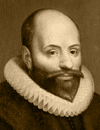 On PredestinationJames Arminius
James Arminius critiques the Supralapsarian view of predestination, arguing that it is not a necessary doctrine for salvation and that it does not align with the teachings of Scripture.
 Ambrosius MediolanensisJohn Gill
Ambrose's views on predestination emphasize God's election and grace, rather than human merit.
- AthanasiusJohn Gill
John Gill's sermon on Athanasius explores his pivotal role in articulating the doctrines of predestination and the deity of Christ within Christian theology.
- Basilius CaesariensisJohn Gill
Basil the Great teaches that everything that happens was foreordained by God, and that the elect are a distinct people chosen for an inheritance of everlasting good things.
- Caecillius Thascius CyprianusJohn Gill
John Gill's sermon on Cyprian explores his theological contributions, particularly on predestination and grace, emphasizing humility in faith.
- Clemens AlexandrinusJohn Gill
John Gill's sermon on Clement of Alexandria explores the theological implications of predestination and election in early Christianity.
- Clemens RomanusJohn Gill
John Gill's sermon on Clemens Romanus explores the early Christian writer's teachings on election, God's sovereignty, and the importance of unity and love within the church.
- Cyrillus HierosolymitanusJohn Gill
The sermon explores Cyril of Jerusalem's teachings on predestination and the role of the Holy Spirit in the sanctification of the elect.
- Gregorius NazianzenusJohn Gill
The sermon explores Gregory Nazianzenus's teachings on predestination, divine grace, and the significance of being chosen by God in the context of early Christian theology.
- HieronymusJohn Gill
John Gill's sermon on Hieronymus explores the concept of election and predestination, emphasizing that God's choice of individuals for salvation is based on His mercy and love, rather than their holiness or good works.
- Hilarius DiaconusJohn Gill
John Gill's sermon on Hilarius Diaconus explores the theological implications of predestination and God's grace in salvation.
- Hilarius PictaviensisJohn Gill
The sermon explores the theological insights of Hilarius Pictaviensis on predestination and the nature of God's elect.
- IgnatiusJohn Gill
The sermon explores the life and teachings of Ignatius, emphasizing his views on predestination and the distinction between the elect and the wicked.
- IrenaeusJohn Gill
John Gill's sermon on Irenaeus explores the themes of predestination, divine sovereignty, and the implications of human choices in the context of early Christian theology.
- Joannes ChrysostomusJohn Gill
John Gill's sermon on Joannes Chrysostomus explores the theological implications of predestination and God's foreknowledge in salvation.
- JustinJohn Gill
The sermon discusses Justin Martyr's insights on God's foreknowledge and the interplay between divine election and human free will.
- Minutius FelixJohn Gill
The sermon argues that the doctrine of predestination was held by early Christians, and that it is not inconsistent with the idea of God's justice.
- NovatianusJohn Gill
This sermon explores the theological contributions and controversies surrounding Novatianus, particularly his views on predestination and the nature of Christ's glory.
- Origenes AlexandrinusJohn Gill
This sermon explores the theological contributions of Origen of Alexandria, particularly his views on predestination and grace.
- TertullianJohn Gill
This sermon explores Tertullian's contributions to the understanding of predestination and the interplay between election and reprobation in Christian theology.