Exodus is the 2nd book of the Bible, part of the Old Testament within the Pentateuch. It contains 40 chapters and 1213 verses. It is traditionally attributed to Moses.
An Exposition, with Practical Observations, of The Second Book of Moses, Called Exodus
Moses (the servant of the Lord in writing for him as well as in acting for him - with the pen of God as well as with the rod of God in his hand) having, in the first book of his history, preserved and transmitted the records of the church, while it existed in private families, comes, in this second book, to give us an account of its growth into a great nation; and, as the former furnishes us with the best economics, so this with the best politics. The beginning of the former book shows us how God formed the world for himself; the beginning of this shows us how he formed Israel for himself, and both show forth his praise, Isa 43:21. There we have the creation of the world in history, here the redemption of the world in type. The Greek translators called this book Exodus (which signifies a departure or going out) because it begins with the story of the going out of the children of Israel from Egypt. Some allude to the names of this and the foregoing book, and observe that immediately after Genesis, which signifies the beginning or original, follows Exodus, which signifies a departure; for a time to be born is immediately succeeded by a time to die. No sooner have we made our entrance into the world than we must think of making our exit, and going out of the world. When we begin to live we begin to die. The forming of Israel into a people was a new creation. As the earth was, in the beginning, first fetched from under water, and then beautified and replenished, so Israel was first by an almighty power made to emerge out of Egyptian slavery, and then enriched with God's law and tabernacle. This book gives us, I. The accomplishment of the promises made before to Abraham (ch. 1-19), and then, II. The establishment of the ordinances which were afterwards observed by Israel (ch. 20-40). Moses, in this book, begins, like Caesar, to write his own Commentaries; nay, a greater, a far greater, than Caesar is here. But henceforward the penman is himself the hero, and gives us the history of those things of which he was himself an eye and ear-witness, et quorum pars magna fuit - and in which he bore a conspicuous part. There are more types of Christ in this book than perhaps in any other book of the Old Testament; for Moses wrote of him, Joh 5:46. The way of man's reconciliation to God, and coming into covenant and communion with him by a Mediator, is here variously represented; and it is of great use to us for the illustration of the New Testament, now that we have that to assist us in the explication of the Old.
▶Sermons
Audio
 Come UpGlenn Meldrum · 1:08:48
Glenn Meldrum's sermon 'Come Up' explores the true purpose of the Exodus as God's call for His people to enter into a relationship with Him as a kingdom of priests.
 (Exodus) Exodus 27:9-21J. Vernon McGee · 3:34
The sermon explores the significance of the tabernacle's entrance, the oil for the light, and the brazen laver, highlighting the importance of the Holy Spirit in worship and believers being used as light in the world.
- (Exodus) Exodus 32:1-10J. Vernon McGee · 4:21
The Israelites' idolatry and apostasy serve as a warning to Christians of the dangers of turning away from God.
- (Exodus) Exodus 32:15-25J. Vernon McGee · 4:41
The sermon explores Moses' response to Israel's idolatry, highlighting the seriousness of sin and the power of intercession.
- (Exodus) Exodus 3:3-8J. Vernon McGee · 4:49
The sermon explores Moses' encounter with God at the burning bush, emphasizing the themes of holiness, redemption, and the significance of Jesus in revealing God to humanity.
- (Exodus) Exodus 40:34-38J. Vernon McGee · 4:34
The sermon emphasizes the importance of following the guidance of the Holy Spirit, which is represented by the cloud in the Old Testament, and prioritizing the Word of God in our decisions.
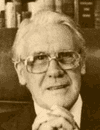 Exodus 24-25Leonard Ravenhill · 1:19:56
Leonard Ravenhill emphasizes the importance of humility, spiritual maturity, and worship in the Christian life, and encourages listeners to strive for a deeper relationship with God.
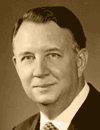 A Mirror Covered With WaterParis Reidhead · 51:56
The sermon explores the Christian journey from forgiveness to intimate fellowship with God, using the tabernacle as a metaphor for spiritual growth and self-examination.
 The Exodus - From Egypt to Canaan - Sermon 1 of 5Roy Hession · 53:45
God's purpose in saving us is to bring us out of spiritual bondage and into a life of freedom and fellowship with Him.
- The Exodus - From Egypt to Canaan - Sermon 2 of 5Roy Hession · 54:51
The exodus is a demonstration of God's power and presence in our lives, calling us to repentance and reminding us of God's faithfulness even in difficult times.
- The Exodus - From Egypt to Canaan - Sermon 3 of 5Roy Hession · 54:40
The sermon emphasizes the importance of faith and trust in God's original purpose, which is to bring believers out of spiritual Egypt and into the Promised Land of spiritual Canaan.
- The Exodus - From Egypt to Canaan - Sermon 4 of 5Roy Hession · 52:17
The greatest crisis that Israel faced in the wilderness was the incident in Numbers 13 and 14, where they refused to trust God and compare giants with themselves, rather than with God.
- The Exodus - From Egypt to Canaan - Sermon 5 of 5Roy Hession · 55:07
This sermon explores the journey from Egypt to Canaan as a metaphor for the Christian life, emphasizing the role of Christ in our sanctification and victory over sin.
 Getting Out (TGC 2011)Tim Keller · 52:52
Tim Keller explains how the Exodus and the Red Sea crossing powerfully illustrate the Christian salvation experience as a deliverance from layered bondage through grace and a mediator.
▶People
- WRITTEN_BY Moses
- MENTIONS Moses
- MENTIONS God
- MENTIONS Abraham
- MENTIONS Canaan
- MENTIONS Jacob (Israel)
- MENTIONS Reuben
- MENTIONS Judah (patriarch)
- MENTIONS Zebulun
- MENTIONS Benjamin (patriarch)
- MENTIONS Dan
- MENTIONS Naphtali
- MENTIONS Gad
- MENTIONS Asher
- MENTIONS Puah
- MENTIONS Reuel
- MENTIONS Zipporah
- MENTIONS Isaac
- MENTIONS Aaron
- MENTIONS Amorite
- MENTIONS Hivite
- MENTIONS Jebusite
- MENTIONS Zephon
- MENTIONS Hanoch
- MENTIONS Pallu
- MENTIONS Jemuel
- MENTIONS Ohad
- MENTIONS Jachin
- MENTIONS Zerah
- MENTIONS Gershon
- MENTIONS Kohath
- MENTIONS Merari
- MENTIONS Libni
- MENTIONS Izhar
- MENTIONS Mushi
- MENTIONS Jochebed
- MENTIONS Mishael
- MENTIONS Elizaphan
- MENTIONS Elisheba
- MENTIONS Nahshon
- MENTIONS Abihu
- MENTIONS Ithamar
- MENTIONS Ebiasaph
- MENTIONS Putiel
- MENTIONS Hur
- MENTIONS Uri
- MENTIONS Ahisamach
- MENTIONS Nun